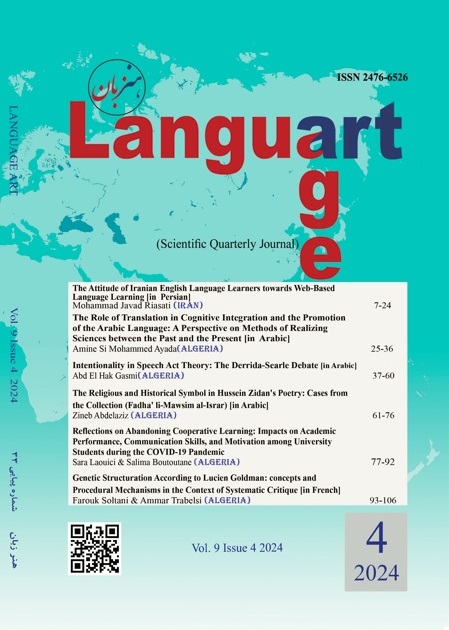
The Role of Translation in Cognitive Integration and the Promotion of the Arabic Language: A Perspective on Methods of Realizing Sciences between the Past and the Present
DOI:
https://doi.org/10.22046/LA.2024.20Keywords:
Cognitive Integration, Translation, Arabic Language, Transfer of Sciences, Cognitive Integration of TranslatorsAbstract
This paper discusses the role of translation in achieving cognitive integration, which contributed to the construction and revival of Arabic sciences, making them effective and present in the civilizational building of neighboring nations. It also sheds light on the role of the Arabic language in transferring knowledge, considering it a significant means that contributes to expanding the circle of cognitive integration and its construction. The research topics address the ancient Arabs' awareness of the necessity of cognitive integration and their adoption of their language as a bridge and a means of conveying the sciences they reached to neighboring countries. The translation of various sciences into the Arab and Islamic world would not have been achieved without the transfer of materials from the languages and cultures of ancient nations, such as Greek and Persian Pahlavi, and from the philosophy and sciences of India, into Arabic, and then from Arabic into Latin in the Middle Ages. Furthermore, many of the transferring scholars achieved cognitive integration in the sciences and knowledge they translated, so diverse sciences converged in many of them. We mention here among these Thabit ibn Qurra al-Harrani, the Arab translator scholar who was famous for his depth in astronomy, mathematics, geometry, and music, and who translated several works from Greek into Arabic. Here, it must be noted in fairness that many scholars who wrote in Arabic were from different races and societies. Indeed, most of them were Persians, and they wrote their scientific research in the Arabic tongue, as well as in their own (Persian) language; in research models, they worked on translation and authorship, transferring their works from their original languages to Arabic. Despite this, the vast majority of scientific works produced in the periods between the ninth and sixteenth centuries were written in the Arabic language by scholars who mastered multiple disciplines (what we call today a "polymath" or encyclopedic scholar). They explored various knowledge, identified what was suitable for transfer and the method thereof, facilitated the difficult and simplified the complex, thereby establishing the first building blocks of our subject on the role of translation in achieving cognitive integration between sciences.
References
القرآن الكريم برواية ورش.
أبو حامد الغزالي (2000). ميزان العمل (ط1). دار الكتب العلمية.
أعظمي، أ. ز. (2008). حركة الترجمة في العصر العباسي (ط1). دار الحرف العربي.
البركة، ب. (2012). الترجمة إلى العربية: دورها في تعزيز الثقافة وبناء الهوية. المركز العربي للأبحاث ودراسة السياسات.
الشاطبي (1980). الموافقات في أصول الأحكام (ج4، ط2). دار الفكر العربي.
الشربيني، ف.، والطنطاوي، ع. (2001). مداخل عالمية في تطوير المناهج التعليمية على ضوء تحديات القرن الحادي والعشرين. دار الانجلو المصرية.
الموسوعة الفقهية (1986). (ج7، ط2). وزارة الأوقاف والشؤون الإسلامية.
طه، ع. ا.، وأبو عبية، ع. ا. (2004). الحضارة الإسلامية: دراسة في تاريخ العلوم الإسلامية (ج1-2، ط1). دار الكتب العلمية.
عقيلة، ح. (2012). نقلا عن التكامل المعرفي: أثره في التعليم الجامعي وضرورته الحضارية (ط1). المعهد العالمي للفكر الإسلامي.
فاضل محمد الحسيني (2006). آفاق الحضارة العربية الإسلامية (ط1). دار الشروق للنشر.
فتحي حسن ملكاوي (2011). منهجية التكامل المعرفي: مقدمات في المنهجية الإسلامية (ط1). المعهد العالمي للفكر الإسلامي.
محمد عبد الحميد الحمد (2011). حوار الأمم: تاريخ الترجمة والإبداع عند العرب والسريان (ط1). دار المدى للطباعة والنشر والتوزيع.
محمد عويضة (1993). سيرة الأعلام (ج7، ط1). دار الكتب العلمية.
نسيم مجلي (2010). حنين بن إسحاق وعصر الترجمة العربية (ط1). مطبعة التمدن الصناعية.
صالح أحمد العلي (1982). العراق في التاريخ (ط1). دار الحرية للطباعة.
عبد اللطيف محمد العبد (1977). أخلاق الطبيب للرازي (تحقيق). مكتبة دار التراث.
الطيطي، م. ع. (2006). تطوير أنموذج تكاملي لكتاب التربية الاجتماعية الوطنية. مجلة جرش للبحوث والدراسات، (11)1.
تركي رابح (1981). لغة عالمية من جديد؟. مجلة الفيصل، (45)، 21.
حياة كتاب (2012). أهمية الترجمة في تطوير البحث العلمي في اللغة العربية. مجلة الممارسات اللغوية، (11).
عبدالله مبشر الطرازي (2002). جهود العرب في نشر العلوم الإسلامية واللغة العربية. مجلة الفيصل، (307)، 32.
محمد مدحت وإبراهيم صالح (2006). فاعلية المدخل التكاملي القائم على حل المشكلات في تنمية التحصيل بمبادئ العلوم والرياضيات والدافع للإنجاز لدى تلاميذ المرحلة الابتدائية. مجلة كلية التربية ببورسعيد، (1)، 168.
لسان العرب (ب.ت.). دار صادر.
معجم اللغة العربية المعاصر (2008). (ط1). عالم الكتب.
العلم في عصر الحضارة الإسلامية (ب.ت.). تم الاسترداد في 26 نوفمبر 2021، من https://ar.wikipedia.org/wiki/العلم_في_الحضارة_الإسلامية
محسن المحمدي (2016). أثر الترجمة في اللغة ودرجة استيعابها العلوم. تم الاسترداد في 28 نوفمبر 2021، من https://darfikr.com/node/11098
منى المالكي (2021). الترجمة ظل المعرفة. تم الاسترداد في 25 نوفمبر 2021، من https://www.okaz.com.sa/articles/authors/2055975
References
Al-Qur’an al-Karim bi-riwayat Warsh.
‘Aqilah, H. (2012). Naqalan ‘an al-Takamul al-Ma‘rifi: Atharuhu fi al-Ta‘lim al-Jami‘i wa Dururatuhu al-Hadariyah (1st ed.). Al-Ma‘had al-‘Alami lil-Fikr al-Islami.
‘Awidah, M. (1993). Sirat al-A‘lam (Vol. 7, 1st ed.). Dar al-Kutub al-‘Ilmiyah.
A‘zami, U. Z. (2008). Harakat al-Tarjamah fi al-‘Asr al-‘Abbasi (1st ed.). Dar al-Harf al-‘Arabi.
Abu Hamid al-Ghazali. (2000). Mizan al-‘Amal (1st ed.). Dar al-Kutub al-‘Ilmiyah.
Al-‘Abd, ‘A. L. M. (1977). Akhlaq al-Tabib lil-Razi (Tahqiq). Maktabat Dar al-Turath.
Al-‘Ali, S. A. (1982). Al-‘Iraq fi al-Tarikh (1st ed.). Dar al-Hurriyah lil-Tiba‘ah.
Al-‘Ilm fi ‘Asr al-Hadarah al-Islamiyah. (n.d.). Retrieved November 26, 2021, from https://ar.wikipedia.org/wiki/العلم_في_الحضارة_الإسلامية
Al-Barakah, B. (2012). Al-Tarjamah ila al-‘Arabiyah: Dawruha fi Ta‘ziz al-Thaqafah wa Bina’ al-Hawiyah. Al-Markaz al-‘Arabi lil-Abhath wa Dirasat al-Siyasat.
Al-Hamad, M. ‘A. H. (2011). Hiwar al-Umam: Tarikh al-Tarjamah wa al-Ibda‘ ‘ind al-‘Arab wa al-Suryan (1st ed.). Dar al-Mada lil-Tiba‘ah wa al-Nashr wa al-Tawzi‘.
Al-Husayni, F. M. (2006). Afaq al-Hadarah al-‘Arabiyah al-Islamiyah (1st ed.). Dar al-Shuruq lil-Nashr.
Al-Maliki, M. (2021). Al-Tarjamah Zill al-Ma‘rifah. Retrieved November 25, 2021, from https://www.okaz.com.sa/articles/authors/2055975
Al-Mawsu‘ah al-Fiqhiyah. (1986). Al-Mawsu‘ah al-Fiqhiyah (Vol. 7, 2nd ed.). Wizarat al-Awqaf wa al-Shu’un al-Islamiyah.
Al-Muhammadi, M. (2016). Athar al-Tarjamah fi al-Lughah wa Darajat Isti‘abiha al-‘Ulum. Retrieved November 28, 2021, from https://darfikr.com/node/11098
Al-Sharbini, F., & al-Tantawi, ‘I. (2001). Madakhil ‘Alamiyah fi Tatwir al-Manahij al-Ta‘limiyah ‘ala Daw’ Tahaddiyat al-Qarn al-Hadi wa al-‘Ishrin. Dar al-Anglo al-Misriyah.
Al-Shatibi. (1980). Al-Muwafaqat fi Usul al-Ahkam (Vol. 4, 2nd ed.). Dar al-Fikr al-‘Arabi.
Al-Tarazi, ‘A. M. (2002). Juhud al-‘Arab fi Nashr al-‘Ulum al-Islamiyah wa al-Lughah al-‘Arabiyah. Majallat al-Faysal, (307), 32.
Al-Titi, M. ‘I. (2006). Tatwir Namudhaj Takamuli liKitab al-Tarbiyah al-Ijtima‘iyah al-Wataniyah. Majallat Jarash lil-Buhuth wa al-Dirasat, 11(1).
Bassetta, M. (2017). Integrated survey techniques for the morphological transformation analysis. In Handbook of research on emerging technologies for architectural and archaeological heritage (1st ed., p. 322). IGI Global.
D’hulst, L., & Gambier, Y. (2018). A history of modern translation knowledge: Sources, concepts and effects. John Benjamins Publishing Company.
Fathi, H. M. (2011). Manhajiyat al-Takamul al-Ma‘rifi: Muqaddimat fi al-Manhajiyah al-Islamiyah (1st ed.). Al-Ma‘had al-‘Alami lil-Fikr al-Islami.
Kitab, H. (2012). Ahamiyat al-Tarjamah fi Tatwir al-Bahth al-‘Ilmi fi al-Lughah al-‘Arabiyah. Majallat al-Mumarasat al-Lughawiyah, (11).
Lisan al-‘Arab. (n.d.). Dar Sadir.
Madhat, M., & Salih, I. (2006). Fa‘iliyat al-Madkhal al-Takamuli al-Qa’im ‘ala Hall al-Mushkilat fi Tanmiyat al-Tahsil bi-Mabadi’ al-‘Ulum wa al-Riyadiyat wa al-Dafi‘ lil-Injaz lada Tullab al-Marhalah al-Ibtida’iyah. Majallat Kuliyyat al-Tarbiyah bi-Bur Sa‘id, (1), 168.
Majli, N. (2010). Hunayn bin Ishaq wa ‘Asr al-Tarjamah al-‘Arabiyah (1st ed.). Matba‘at al-Tamaddun al-Sina‘iyah.
Manning, P., Owen, A., & Burnett, C. (2018). *Knowledge in translation: Global patterns of scientific exchange, 1000-1800 CE*. University of Pittsburgh Press.
Morone, P., & Taylor, R. (2009). Knowledge architecture and knowledge flows. In Encyclopedia of information science and technology (2nd ed., p. 2319). IGI Global.
Mu‘jam al-Lughah al-‘Arabiyah al-Mu‘asirah. (2008). (1st ed.). ‘Alam al-Kutub.
Murray, K. S. K. (1996). A tool for knowledge integration. Proceedings of the Thirteenth National Conference on Artificial Intelligence.
Nurdin, N. (2018). Knowledge integration strategy in Islamic banks. In The role of knowledge in open innovation (1st ed., p. 118). IGI Global.
Rabih, T. (1981). Lughah ‘Alamiyah min Jadid?. Majallat al-Faysal, (45), 21.
Taha, ‘A. A., & Abu ‘Ubayyah, ‘A. H. (2004). Al-Hadarah al-Islamiyah: Dirasah fi Tarikh al-‘Ulum al-Islamiyah (Vols. 1-2, 1st ed.). Dar al-Kutub al-‘Ilmiyah.
Downloads
Published
How to Cite
Issue
Section
License
Copyright (c) 2024 Amine AYADA

This work is licensed under a Creative Commons Attribution 4.0 International License.