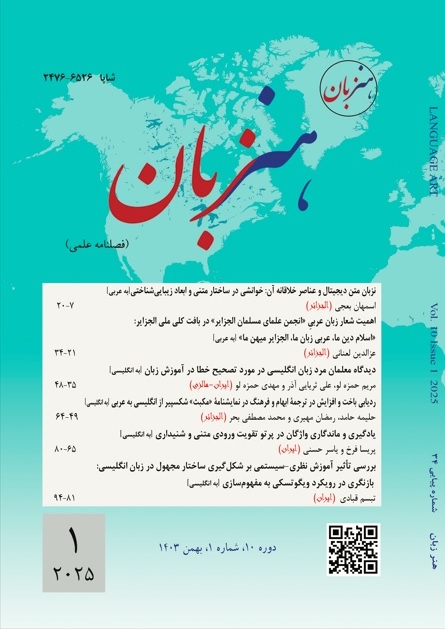
یادگیری و ماندگاری واژگان در پرتو تقویت ورودی متنی و شنیداری
DOI::
https://doi.org/10.22046/LA.2025.05کلمات کلیدی:
یادگیری واژگان, ماندگاری واژگان, تقویت ورودی, تقویت ورودی متنی, ورودی شنیداریچکیده
پژوهش حاضر با هدف بررسی تأثیر تقویت ورودی متنی و شنیداری بر یادگیری و ماندگاری واژگان زبانآموزان ایرانی سطح متوسط زبان انگلیسی انجام شد. این مطالعه از طرح شبهتجربی پیروی کرد. تعداد ۶۰ زبانآموز سطح متوسط زبان انگلیسی از دبیرستان بهعنوان شرکتکننده انتخاب شدند. بهمنظور حصول اطمینان از همگنی دانشآموزان، پیش از آغاز مطالعه یک آزمون تعیین سطح برگزار گردید تا سطح یکسان شرکتکنندگان تأیید شود. سپس آنها بهطور تصادفی در دو گروه آزمایشی و یک گروه گواه قرار گرفتند. پیشآزمون واژگان برای تمامی گروهها اجرا شد. پس از آن، گروههای آزمایشی تحت آموزش با استفاده از تقویت متنی و ورودی شنیداری قرار گرفتند، در حالی که گروه گواه هیچ مداخلهای دریافت نکرد. پس از شانزده جلسه، پسآزمون فوری واژگان مشابه پیشآزمون برای همه شرکتکنندگان اجرا شد. پسآزمون تأخیری واژگان دو هفته بعد برگزار گردید. نتایج تحلیل واریانس و آزمون تی جفتی نشان داد که استفاده از تقویت ورودی متنی و ورودی شنیداری به عملکرد بهتر شرکتکنندگان در یادگیری و ماندگاری واژگان منجر شده است (p<0.05) با این حال، میزان بهبودی که رخ داد برای دو گروه آزمایشی یکسان نبود؛ به این معنا که تقویت ورودی متنی نسبت به ورودی شنیداری به یادگیری و ماندگاری واژگان در زبانآموزان کمک بیشتری میکند.
مراجع
August, D., Carlo, M., Dressler, C., & Snow, C. (2005). The crucial role of vocabulary development for English language learners. Learning Disabilities Research & Practice , 20(1), 50-57.
Baleghizadeh, S., Yazdanjoo, SH., & Fallahpour, H. (2018). The effect of input enhancement on academic vocabulary learning among intermediate EFL learners in Iran. TESOL Reporter , 50, 31-48.
Cho, M., & Reinders, R. (2013) .The effects of aural input enhancement on L2 acquisition. In J. M. Bergsleithner, S. N. Frota, & J. K. Yoshioka, (Eds.) Noticing and Second Language Acquisition: Studies in Honor of Richard Schmidt (pp. 133–148). Honolulu: University of Hawai‘i, National Foreign Language Resource Center.
Coady, J., & Huckin, T. (1997). Second Language Vocabulary Acquisition: A Rationale for Pedagogy. Cambridge: Cambridge University Press.
Ellis, R. (1997). SLA Research and Language Teaching. New York: Oxford University Press.
Farrokh, P., & Sharifi, F.(2019). On the impact of determination and compensation strategies on language learners' vocabulary development. International Journal of Instruction, 12(3),1-14.
Gascoigne, C. (2006). Explicit input enhancement: Effects on target and non-target aspects of second language acquisition. Foreign Language Annals, 39(4), 551–564.
Hosseini, M., & Bagheri, M. (2021). Multimodal input enhancement and its effect on EFL learners' vocabulary acquisition. Journal of Language Teaching and Research, 12(5), 786-798.
Izumi, S. (2002). Output, input enhancement, and the noticing hypothesis: An experimental study on ESL revitalization. Studies in Second Language Acquisition, 24(4), 541- 577.
Jensen, E D.,& Vinther, T. (2003). Exact repetition as input enhancement in second language acquisition. Language Learning, 53(3), 373-428.
Johnson, A., & Kim, S. (2021). The impact of multimodal input enhancement on vocabulary acquisition: A comparative study of textual and aural methods. Language Learning & Technology, 25(3), 45–68.
Kim , HY. (1995). Intake from the speech stream: Speech elements that L2 learners attend to. In R. W. Schmidt (Ed.), Attention and Awareness in Foreign Language Learning (pp. 65–84). Hawai’i: University of Hawai’i Press
Laufer, B. (2003). Vocabulary acquisition in a second language: do learners really acquire most vocabulary by reading? Some empirical evidence. Canadian Modern Language Review, 59(4), 567–87
Lee, S K. (2007). Effects of textual enhancement and topic familiarity on Korean EFL students' reading comprehension and learning of passive form. Language Learning, 57(1), 87-118.
Martinez, F., Rodriguez, J., & Gonzalez, M. (2022). The effects of stress patterns and repetition in aural input enhancement on phrasal verb acquisition. Journal of Applied Linguistics, 45(3), 234-256.
Nunan , D. (1999). Second Language Teaching & Learning. Boston: Heinle & Heinle Publishers.
Petchko, K. (2011). Input enhancement, noticing, and incidental vocabulary acquisition. The Asian EFL Journal Quarterly, 3(4), 228-255.
Peters, E. (2012). Learning German formulaic sequences: the effect of two attention-drawing techniques. The Language Learning Journal, 40(1), 65–79.
Sauer, BM. (2017). The effects of different types of textual input enhancements on incidental and intentional vocabulary learning from reading, PhD thesis, King’s College London, UK.
Schmidt, RW. (1990). The role of consciousness in second language learning. Applied Linguistics,11(2), 129–58.
Sharwood Smith, M. (1993). Input enhancement in instructed SLA: Theoretical bases. Studies in Second Language Acquisition, 15, 165–179.
Shook, DJ. (1994). FL/L2 reading, grammatical information and the input-to-intake phenomenon. Applied Language Learning, 5(2), 57-93.
Vu , DV., & Peters , E. (2022). Learning vocabulary from reading-only, reading-while –listening, and reading with textual input enhancement: Insights from Vietnamese EFL learners. RELC, 53(1), 85-100.
Wong, W. (2005). Input Enhancement: From Theory and Research to the Classroom. Boston: McGraw-Hill.
Zimmerman, C. (1997). Do reading and interactive vocabulary instruction make a difference? An empirical study. TESOL Quarterly, 31, 121-140.
##submission.downloads##
چاپ شده
ارجاع به مقاله
شماره
نوع مقاله
مجوز
حق نشر 2025 Parisa Farrokh, Yaser Hasani

این پروژه تحت مجوز بین المللی Creative Commons Attribution 4.0 می باشد.
فصلنامه هنر زبان یک مجله دسترسی آزاد است و مقالات پس از پذیرش در دسترس عموم قرار می گیرند و استفاده از آن با ذکر منبع آزاد است